Essential RDM Concepts and Definitions
-
Research Data Management (RDM): The process of organising, documenting, storing, and preserving research data throughout a project and beyond, to ensure they remain understandable and reusable.
-
Research Data: Digital or non-digital materials that are collected, created, or generated during research and are used to support or validate research findings. A formal definition describes them as "factual records used as primary sources for scientific research, which are necessary to validate research results". They can be generated by different means (such as measurement, simulation, observation, or survey), take different forms (numbers, text, images, sounds), and be stored in many digital formats (binary, text, spreadsheets, etc.)
-
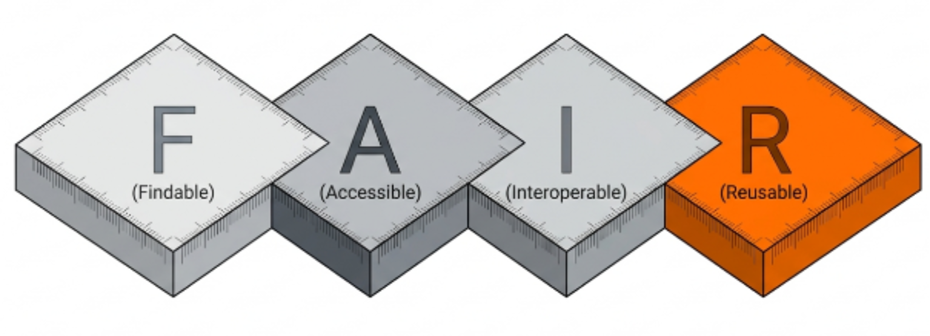
FAIR Principles: A core framework ensuring digital assets are optimally utilized. Data must be Findable (using unique identifiers like DOIs and rich metadata), Accessible (retrievable via standard, open protocols), Interoperable (using accessible languages and vocabularies), and Reusable (released with clear licenses and provenance).
-
Data Management Plan (DMP): A formal document outlining how data will be handled during and after a project, essential for establishing legal requirements, storage needs, and collaboration protocols.